
 Openresty
OpenResty® 是一个基于 Nginx 的高性能 Web 平台,用于方便地搭建能够处理超高并发、扩展性极高的动态 Web 应用、Web 服务和动态网关。具备下列特点:
- 具备Nginx的完整功能
- 基于Lua语言进行扩展,集成了大量精良的 Lua 库、第三方模块
- 允许使用Lua自定义业务逻辑、自定义库

官方网站: https://openresty.org/cn/ (opens new window)
安装教程:安装OpenResty.pdf (opens new window)
基本都是把OpenResty当做Nginx来使用
# 使用步骤
OpenResty监听请求
OpenResty的很多功能都依赖于其目录下的Lua库,需要在nginx.conf中指定依赖库的目录,并导入依赖:
1)添加对OpenResty的Lua模块的加载
修改/usr/local/openresty/nginx/conf/nginx.conf文件,在其中的http下面,添加下面代码:
#lua 模块
lua_package_path "/usr/local/openresty/lualib/?.lua;;";
#c模块
lua_package_cpath "/usr/local/openresty/lualib/?.so;;";
2
3
4
2)监听/api/item路径
修改/usr/local/openresty/nginx/conf/nginx.conf文件,在nginx.conf的server下面,添加对/api/item这个路径的监听:
location  /api/item {
    # 默认的响应类型
    default_type application/json;
    # 响应结果由lua/item.lua文件来决定
    content_by_lua_file lua/item.lua;
}
2
3
4
5
6
这个监听,就类似于SpringMVC中的@GetMapping("/api/item")做路径映射。
而content_by_lua_file lua/item.lua则相当于调用item.lua这个文件,执行其中的业务,把结果返回给用户。相当于java中调用service。
编写lua
1)在/usr/loca/openresty/nginx目录创建文件夹:lua
2)在/usr/loca/openresty/nginx/lua文件夹下,新建文件:item.lua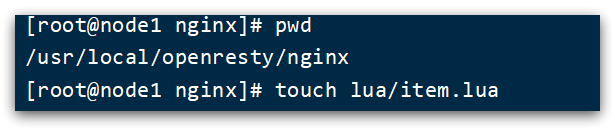
3)编写item.lua,返回假数据
item.lua中,利用ngx.say()函数返回数据到Response中
ngx.say('{"id":10001,"name":"SALSA AIR","title":"RIMOWA 21寸托运箱拉杆箱 SALSA AIR系列果绿色 820.70.36.4","price":17900,"image":"https://m.360buyimg.com/mobilecms/s720x720_jfs/t6934/364/1195375010/84676/e9f2c55f/597ece38N0ddcbc77.jpg!q70.jpg.webp","category":"拉杆箱","brand":"RIMOWA","spec":"","status":1,"createTime":"2019-04-30T16:00:00.000+00:00","updateTime":"2019-04-30T16:00:00.000+00:00","stock":2999,"sold":31290}')
4)重新加载配置 nginx -s reload
# 获取参数的API
OpenResty中提供了一些API用来获取不同类型的前端请求参数:
| 参数格式 | 参数示例 | 参数解析代码示例 |
|---|---|---|
| 路径占位符 | /item/1001 | 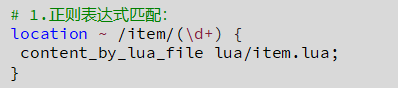 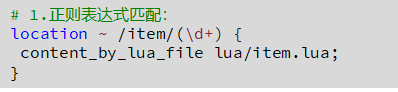 |
| 请求头 | id:1001 | -- 获取请求头,返回值是table类型 local headers = ngx.req.get_headers() |
| Get请求参数 | ?id=1001 | -- 获取GET请求参数,返回值是table类型 local getParams = ngx.req.get_uri_args() |
| Post表单参数 | id=1001 | -- 读取请求体 ngx.req.read_body() -- 获取POST表单参数,返回值是table类型 local postParams = ngx.req.get_post_args() |
| JSON参数 | {"id": 1001} | -- 读取请求体 ngx.req.read_body() -- 获取body中的json参数,返回值是string类型 local jsonBody = ngx.req.get_body_data() |
# 获取参数并返回
前端请求路径:http://localhost/api/item/10001
1)获取商品id
修改/usr/loca/openresty/nginx/nginx.conf文件中监听/api/item的代码,利用正则表达式获取ID:
location ~ /api/item/(\d+) {
    # 默认的响应类型
    default_type application/json;
    # 响应结果由lua/item.lua文件来决定
    content_by_lua_file lua/item.lua;
}
2
3
4
5
6
2)拼接ID并返回
修改/usr/loca/openresty/nginx/lua/item.lua文件,获取id并拼接到结果中返回:
-- 获取商品id
local id = ngx.var[1]
-- 拼接并返回
ngx.say('{"id":' .. id .. ',"name":"SALSA AIR","title":"RIMOWA 21寸托运箱拉杆箱 SALSA AIR系列果绿色 820.70.36.4","price":17900,"image":"https://m.360buyimg.com/mobilecms/s720x720_jfs/t6934/364/1195375010/84676/e9f2c55f/597ece38N0ddcbc77.jpg!q70.jpg.webp","category":"拉杆箱","brand":"RIMOWA","spec":"","status":1,"createTime":"2019-04-30T16:00:00.000+00:00","updateTime":"2019-04-30T16:00:00.000+00:00","stock":2999,"sold":31290}')
2
3
4
3)重新加载并测试 nginx -s reload
# 发送http请求的API
nginx提供了内部API用以发送http请求:
local resp = ngx.location.capture("/path",{
    method = ngx.HTTP_GET,   -- 请求方式
    args = {a=1,b=2},  -- get方式传参数
})
2
3
4
返回的响应内容包括:
- resp.status:响应状态码
- resp.header:响应头,是一个table
- resp.body:响应体,就是响应数据
注意:这里的path是路径,并不包含IP和端口。这个请求会被nginx内部的server监听并处理。
但是我们希望这个请求发送到Tomcat服务器,所以还需要编写一个server来对这个路径做反向代理:
 location /path {
     # 这里是windows电脑的ip和Java服务端口,需要确保windows防火墙处于关闭状态
     proxy_pass http://192.168.150.1:8081;
 }
2
3
4
# 封装http工具
1)添加反向代理,到windows的Java服务
因为item-service中的接口都是/item开头,所以我们监听/item路径,代理到windows上的tomcat服务。
修改 /usr/local/openresty/nginx/conf/nginx.conf文件,添加一个location:
location /item {
    proxy_pass http://192.168.150.1:8081;
}
2
3
以后,只要我们调用ngx.location.capture("/item"),就一定能发送请求到windows的tomcat服务。
2)封装工具类
在/usr/local/openresty/lualib目录下,新建一个common.lua文件:
vi /usr/local/openresty/lualib/common.lua
内容如下:
-- 封装函数,发送http请求,并解析响应
local function read_http(path, params)
    local resp = ngx.location.capture(path,{
        method = ngx.HTTP_GET,
        args = params,
    })
    if not resp then
        -- 记录错误信息,返回404
        ngx.log(ngx.ERR, "http请求查询失败, path: ", path , ", args: ", args)
        ngx.exit(404)
    end
    return resp.body
end
-- 将方法导出
local _M = {
    read_http = read_http
}
return _M
2
3
4
5
6
7
8
9
10
11
12
13
14
15
16
17
18
这个工具将read_http函数封装到_M这个table类型的变量中,并且返回,这类似于导出。使用的时候,可以利用 require('common')来导入该函数库,这里的common是函数库的文件名。
3)实现商品查询
最后,我们修改/usr/local/openresty/lua/item.lua文件,利用刚刚封装的函数库实现对tomcat的查询:
-- 引入自定义common工具模块,返回值是common中返回的 _M
local common = require("common")
-- 从 common中获取read_http这个函数
local read_http = common.read_http
-- 获取路径参数
local id = ngx.var[1]
-- 根据id查询商品
local itemJSON = read_http("/item/".. id, nil)
-- 根据id查询商品库存
local itemStockJSON = read_http("/item/stock/".. id, nil)
2
3
4
5
6
7
8
9
10
这里查询到的结果是json字符串,并且包含商品、库存两个json字符串,页面最终需要的是把两个json拼接为一个json。
# CJSON工具类
OpenResty提供了一个cjson的模块用来处理JSON的序列化和反序列化。
官方地址: https://github.com/openresty/lua-cjson/ (opens new window)
1)引入cjson模块:
local cjson = require "cjson"
2)序列化:
local obj = {
    name = 'jack',
    age = 21
}
-- 把 table 序列化为 json
local json = cjson.encode(obj)
2
3
4
5
6
3)反序列化:
local json = '{"name": "jack", "age": 21}'
-- 反序列化 json为 table
local obj = cjson.decode(json);
print(obj.name)
2
3
4
# 实现Tomcat查询
-- 导入common函数库
local common = require('common')
local read_http = common.read_http
-- 导入cjson库
local cjson = require('cjson')

-- 获取路径参数
local id = ngx.var[1]
-- 根据id查询商品
local itemJSON = read_http("/item/".. id, nil)
-- 根据id查询商品库存
local itemStockJSON = read_http("/item/stock/".. id, nil)

-- JSON转化为lua的table
local item = cjson.decode(itemJSON)
local stock = cjson.decode(stockJSON)

-- 组合数据
item.stock = stock.stock
item.sold = stock.sold

-- 把item序列化为json 返回结果
ngx.say(cjson.encode(item))
2
3
4
5
6
7
8
9
10
11
12
13
14
15
16
17
18
19
20
21
22
23
# 配置基于uri负载均衡
nginx提供了基于请求路径做负载均衡的算法:nginx根据请求路径做hash运算,把得到的数值对tomcat服务的数量取余,余数是几,就访问第几个服务,实现负载均衡。防止使用默认的负载均衡算法轮询访问tomcat集群,导致JVM缓存命中率低,并且造成缓存冗余。
例如:
- 我们的请求路径是 /item/10001
- tomcat总数为2台(8081、8082)
- 对请求路径/item/1001做hash运算求余的结果为1
- 则访问第一个tomcat服务,也就是8081
只要id不变,每次hash运算结果也不会变,那就可以保证同一个商品,一直访问同一个tomcat服务,确保JVM缓存生效。
实现
修改/usr/local/openresty/nginx/conf/nginx.conf文件,实现基于ID做负载均衡。
首先,定义tomcat集群,并设置基于路径做负载均衡:
upstream tomcat-cluster {
    hash $request_uri;
    server 192.168.150.1:8081;
    server 192.168.150.1:8082;
}
2
3
4
5
然后,修改对tomcat服务的反向代理,目标指向tomcat集群:
location /item {
    proxy_pass http://tomcat-cluster;
}
2
3
重新加载OpenResty nginx -s reload
# 配置查询Redis缓存
封装Redis工具
OpenResty提供了操作Redis的模块,我们只要引入该模块就能直接使用。但是为了方便,我们将Redis操作封装到之前的common.lua工具库中。
修改/usr/local/openresty/lualib/common.lua文件:
1)引入Redis模块,并初始化Redis对象
-- 导入redis
local redis = require('resty.redis')
-- 初始化redis
local red = redis:new()
-- 设置redis超时时间 建立连接的超时时间 请求发送的超时时间 结果响应的超时时间
red:set_timeouts(1000, 1000, 1000)
2
3
4
5
6
2)封装函数,用来释放Redis连接,其实是放入连接池
-- 关闭redis连接的工具方法,其实是放入连接池
local function close_redis(red)
    local pool_max_idle_time = 10000 -- 连接的空闲时间,单位是毫秒
    local pool_size = 100 --连接池大小
    local ok, err = red:set_keepalive(pool_max_idle_time, pool_size)
    if not ok then
        ngx.log(ngx.ERR, "放入redis连接池失败: ", err)
    end
end
2
3
4
5
6
7
8
9
3)封装函数,根据key查询Redis数据
-- 查询redis的方法 ip和port是redis地址,key是查询的key
local function read_redis(ip, port, key)
    -- 获取一个连接
    local ok, err = red:connect(ip, port)
    if not ok then
        ngx.log(ngx.ERR, "连接redis失败 : ", err)
        return nil
    end
    -- 查询redis
    local resp, err = red:get(key)
    -- 查询失败处理
    if not resp then
        ngx.log(ngx.ERR, "查询Redis失败: ", err, ", key = " , key)
    end
    --得到的数据为空处理
    if resp == ngx.null then
        resp = nil
        ngx.log(ngx.ERR, "查询Redis数据为空, key = ", key)
    end
    close_redis(red)
    return resp
end
2
3
4
5
6
7
8
9
10
11
12
13
14
15
16
17
18
19
20
21
22
4)导出
-- 将方法导出
local _M = {
    read_http = read_http,
    read_redis = read_redis
}
return _M
2
3
4
5
6
完整的common.lua:
-- 导入redis
local redis = require('resty.redis')
-- 初始化redis
local red = redis:new()
red:set_timeouts(1000, 1000, 1000)

-- 关闭redis连接的工具方法,其实是放入连接池
local function close_redis(red)
    local pool_max_idle_time = 10000 -- 连接的空闲时间,单位是毫秒
    local pool_size = 100 --连接池大小
    local ok, err = red:set_keepalive(pool_max_idle_time, pool_size)
    if not ok then
        ngx.log(ngx.ERR, "放入redis连接池失败: ", err)
    end
end

-- 查询redis的方法 ip和port是redis地址,key是查询的key
local function read_redis(ip, port, key)
    -- 获取一个连接
    local ok, err = red:connect(ip, port)
    if not ok then
        ngx.log(ngx.ERR, "连接redis失败 : ", err)
        return nil
    end
    -- 查询redis
    local resp, err = red:get(key)
    -- 查询失败处理
    if not resp then
        ngx.log(ngx.ERR, "查询Redis失败: ", err, ", key = " , key)
    end
    --得到的数据为空处理
    if resp == ngx.null then
        resp = nil
        ngx.log(ngx.ERR, "查询Redis数据为空, key = ", key)
    end
    close_redis(red)
    return resp
end

-- 封装函数,发送http请求,并解析响应
local function read_http(path, params)
    local resp = ngx.location.capture(path,{
        method = ngx.HTTP_GET,
        args = params,
    })
    if not resp then
        -- 记录错误信息,返回404
        ngx.log(ngx.ERR, "http查询失败, path: ", path , ", args: ", args)
        ngx.exit(404)
    end
    return resp.body
end
-- 将方法导出
local _M = {
    read_http = read_http,
    read_redis = read_redis
}
return _M
2
3
4
5
6
7
8
9
10
11
12
13
14
15
16
17
18
19
20
21
22
23
24
25
26
27
28
29
30
31
32
33
34
35
36
37
38
39
40
41
42
43
44
45
46
47
48
49
50
51
52
53
54
55
56
57
58
# Nginx本地缓存
OpenResty为Nginx提供了shard dict的功能,可以在nginx的多个worker之间共享数据,实现缓存功能。
启动一个nginx会有一个master进程和多个worker进程,通过worker进程进行数据共享,仅限nginx内使用,多个openresty之间是没办法共享的
1)开启共享字典,在nginx.conf的http下添加配置:
 # 共享字典,也就是本地缓存,名称叫做:item_cache,大小150m
 lua_shared_dict item_cache 150m;
2
2)操作共享字典:
-- 获取本地缓存对象
local item_cache = ngx.shared.item_cache
-- 存储, 指定key、value、过期时间,单位s,默认为0代表永不过期
item_cache:set('key', 'value', 1000)
-- 读取
local val = item_cache:get('key')
2
3
4
5
6
# 实现本地缓存查询
1)修改/usr/local/openresty/lua/item.lua文件,修改read_data查询函数,添加本地缓存逻辑:
-- 导入共享词典,本地缓存
local item_cache = ngx.shared.item_cache

-- 封装查询函数
function read_data(key, expire, path, params)
    -- 查询本地缓存
    local val = item_cache:get(key)
    if not val then
        ngx.log(ngx.ERR, "本地缓存查询失败,尝试查询Redis, key: ", key)
        -- 查询redis
        val = read_redis("127.0.0.1", 6379, key)
        -- 判断查询结果
        if not val then
            ngx.log(ngx.ERR, "redis查询失败,尝试查询http, key: ", key)
            -- redis查询失败,去查询http
            val = read_http(path, params)
        end
    end
    -- 查询成功,把数据写入本地缓存
    item_cache:set(key, val, expire)
    -- 返回数据
    return val
end
2
3
4
5
6
7
8
9
10
11
12
13
14
15
16
17
18
19
20
21
22
23
2)修改item.lua中查询商品和库存的业务,实现最新的read_data函数:
其实就是多了缓存时间参数,过期后nginx缓存会自动删除,下次访问即可更新缓存。这里给商品基本信息设置超时时间为30分钟,库存为1分钟。因为库存更新频率较高,如果缓存时间过长,可能与数据库差异较大。
完整的item.lua文件:
-- 导入common函数库
local common = require('common')
local read_http = common.read_http
local read_redis = common.read_redis
-- 导入cjson库
local cjson = require('cjson')
-- 导入共享词典,本地缓存
local item_cache = ngx.shared.item_cache

-- 封装查询函数
function read_data(key, expire, path, params)
    -- 查询本地缓存
    local val = item_cache:get(key)
    if not val then
        ngx.log(ngx.ERR, "本地缓存查询失败,尝试查询Redis, key: ", key)
        -- 查询redis
        val = read_redis("127.0.0.1", 6379, key)
        -- 判断查询结果
        if not val then
            ngx.log(ngx.ERR, "redis查询失败,尝试查询http, key: ", key)
            -- redis查询失败,去查询http
            val = read_http(path, params)
        end
    end
    -- 查询成功,把数据写入本地缓存
    item_cache:set(key, val, expire)
    -- 返回数据
    return val
end

-- 获取路径参数
local id = ngx.var[1]

-- 查询商品信息
local itemJSON = read_data("item:id:" .. id, 1800,  "/item/" .. id, nil)
-- 查询库存信息
local stockJSON = read_data("item:stock:id:" .. id, 60, "/item/stock/" .. id, nil)

-- JSON转化为lua的table
local item = cjson.decode(itemJSON)
local stock = cjson.decode(stockJSON)
-- 组合数据
item.stock = stock.stock
item.sold = stock.sold

-- 把item序列化为json 返回结果
ngx.say(cjson.encode(item))
2
3
4
5
6
7
8
9
10
11
12
13
14
15
16
17
18
19
20
21
22
23
24
25
26
27
28
29
30
31
32
33
34
35
36
37
38
39
40
41
42
43
44
45
46
47